By Lucy Kelvie, interior designer in North London · 25 October 2026
The short answer: AI can help you design your home, but it can’t design it for you. Tools like ChatGPT can suggest colour palettes, generate images of a room and help you put together a moodboard. What they can’t do is measure your space, see how light moves through it, understand how you live or take responsibility for the finished room. Used thoughtfully, AI is a useful tool for exploring and visualising ideas. The design itself still needs a human eye.
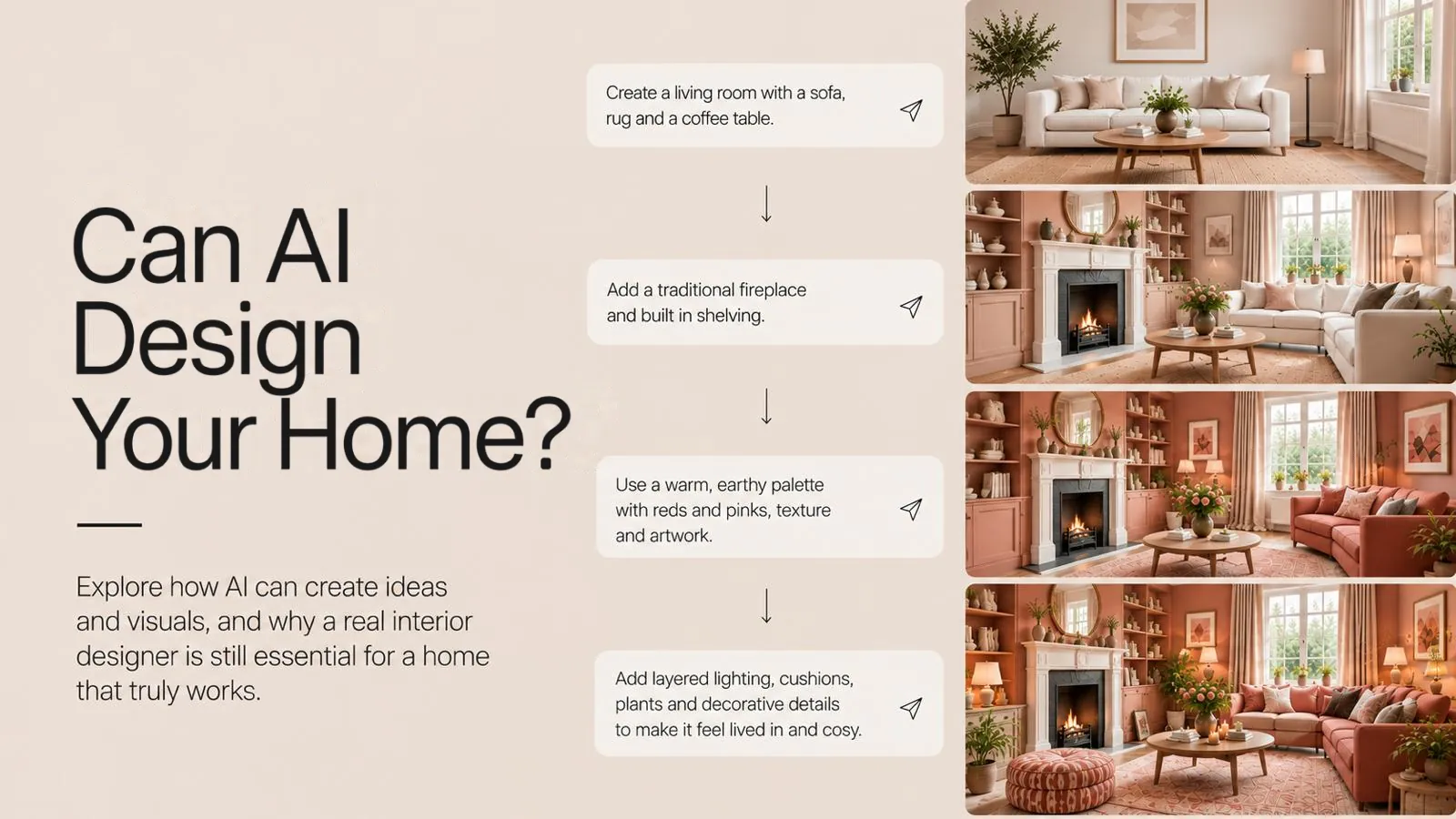
Artificial intelligence has changed the way we approach almost everything, and interior design is no exception. With a few carefully worded prompts, you can ask any AI platform to suggest a colour palette, generate an image of a room, experiment with different styles or even help you rethink the layout of a space.
And the results can be impressive.
But there’s a question worth asking: can AI really design your home?
My answer is that AI can certainly help with the process. It can spark ideas, open up possibilities and help you visualise things you might not have considered. But designing a home that works both visually and practically in real life requires something that goes far beyond generating an attractive image.
It requires an understanding of space, light, materials, proportion and, perhaps most importantly, the people who live there.
And that’s where the difference lies.
A beautiful image isn't the same as a beautifully designed home
We’ve all seen those AI-generated interiors that look effortlessly perfect. The colours are harmonious, the furniture sits just so, and the lighting is always wonderfully atmospheric.
However, a room can look beautiful in an image but be completely impractical in reality.
Will the sofa actually fit without blocking the doorway? Is there enough room to pull out a dining chair? Does the lighting work for reading, cooking or working from home? Will that gorgeous fabric withstand the demands of everyday family life?
These are the questions that turn an appealing concept into a successful interior.
An image can suggest what a room might look like. It can’t necessarily tell you whether that room will work for you.
Your home has its own relationship with light
One of the things I consider carefully when designing an interior is light.
Every home is different. The direction a room faces, the size and position of its windows, the surrounding buildings, the time of day and even the season all influence how a space looks and feels.
A paint colour that appears soft and warm in a north-facing room can look entirely different in a south-facing space flooded with sunlight. A fabric that looks beautiful in a showroom might lose its character in the light at home. Colours change, textures reveal themselves, and shadows shift throughout the day.
AI can simulate lighting and suggest how a room might look under different conditions. But a convincing visualisation isn’t the same as assessing the actual space, observing how the light moves through it and understanding how that affects every design decision.
Experience, observation and judgement matter.
I design for the way you actually live
A home isn’t a collection of beautifully coordinated objects. It’s where life happens.
It’s where you have your morning coffee, entertain friends, help children with their homework, work from the kitchen table or retreat at the end of a long day.
Good interior design begins with understanding those practical realities. How do you use your space? What frustrates you about it? What do you love? What do you need more of? And how do you want your home to make you feel?
Two people can have exactly the same room and completely different ideas about what would make it work for them.
AI can respond to the information you give it, but it doesn’t instinctively understand the nuances of your lifestyle, the things you haven’t thought to mention or the subtle details that make a home feel personal.
A designer asks questions, listens, observes and makes connections. Sometimes the best solution isn’t what a client initially imagined, but something that emerges through conversation, experience and creative thinking.
That’s the value of a personal approach to design.
Knowing what to buy is only part of the job
Finding beautiful furniture, fabrics, wallpaper and accessories has never been easier. There is an extraordinary amount of inspiration and product information available online, and AI can help narrow down ideas and explore different possibilities.
But sourcing is about much more than finding something that looks right on a screen.
It involves knowing which suppliers to approach, understanding the quality of their products, comparing finishes, checking dimensions, navigating lead times and finding alternatives when something isn’t available or doesn’t meet the brief.
Established relationships with suppliers and makers can open up possibilities that aren’t immediately obvious from a search. Samples can be requested, finishes compared, bespoke options explored and practical questions answered before a decision is made.
And then there are the inevitable complications: a discontinued fabric, a delayed delivery, a piece of furniture that doesn’t quite work as expected or a product that looks very different in person.
AI can help with research, but it cannot independently replace the professional relationships, product knowledge and practical judgement that come from working in the industry.
My brain is part of the design
This is perhaps the most important distinction.
Interior design isn’t simply about combining colours, selecting furniture and following a particular aesthetic. It’s about bringing together dozens of different considerations and making them work as a whole.
It’s knowing when a room needs contrast and when it needs restraint. Recognising that an unexpected colour combination might be exactly what’s missing. Understanding how the texture of a fabric will sit alongside a particular stone, or why a piece of furniture feels wrong even when the measurements suggest it should work.
It’s also about instinct, curiosity and experience: the ability to see possibilities where someone else sees a problem.
My approach to design has been shaped by years of working visually, observing detail and developing an understanding of what makes an image, a space or a composition feel right. My background in photography has influenced the way I see colour, light, texture and proportion, and how I bring these elements together.
I don’t follow a single signature style or apply the same formula to every project. I’m interested in creating interiors that feel individual and reflect the people who live in them.
AI can offer suggestions based on patterns and information. It can help me explore an idea or look at a problem from another angle. But the creative direction, the instinct and the judgement that bring a project together are what make the design personal.
A prompt can start a conversation. It can’t replace the thinking behind a design.
And then there's the reality of bringing it all together
A successful interior has to move beyond the moodboard.
Measurements need to be accurate. Products need to be available and suitable. Materials need to work together in reality, not just in a rendering. Budgets need to be considered, priorities established and decisions made in the right order.
Depending on the project, there may also be tradespeople to coordinate with, contractors to liaise with, deliveries to manage and unexpected challenges to resolve.
A design that looks wonderful on screen is only the beginning. Making it happen requires planning, communication, problem solving and an understanding of how all the individual elements come together.
This is particularly important when renovating or making significant changes to a home, where one decision can have a knock-on effect on several others.
AI can be a helpful assistant, but it doesn’t take responsibility for the finished room.
So, is there a place for AI in interior design?
Absolutely.
I don’t see AI as something to fear or dismiss. Used thoughtfully, it can be a valuable tool for exploring ideas, experimenting with colour, developing an initial moodboard or visualising different possibilities.
It can help clients articulate what they like, discover styles they hadn’t considered and arrive at a design conversation with a clearer idea of their preferences.
It can also assist designers with research, organisation and the early stages of creative exploration.
The important thing is understanding what it can do well, and where its limitations begin.
I see AI as another tool in the creative process, not a substitute for the person guiding it. The technology can help us explore more possibilities, but someone still needs to decide which possibilities are right for the space, the budget and the people who will live with the result.
What AI can and can't do in interior design
| Stage | Where AI can help | Where a designer comes in |
|---|---|---|
| Ideas | Suggesting colour palettes, styles and moodboard ideas | Deciding which ideas suit your space, your budget and the way you live |
| Visualising | Generating an image of how a room might look | Checking the sofa fits, the chairs pull out and the lighting works for reading, cooking or working |
| Light and colour | Simulating different lighting conditions | Seeing how real light moves through your room across the day and the seasons |
| Sourcing | Researching products and narrowing down options | Knowing suppliers, comparing samples and finishes, managing lead times and finding alternatives |
| Making it happen | Research and organising information | Accurate measurements, budgets, trades and deliveries, and responsibility for the finished room |
A real-life example: how I used AI, from moodboard to reality
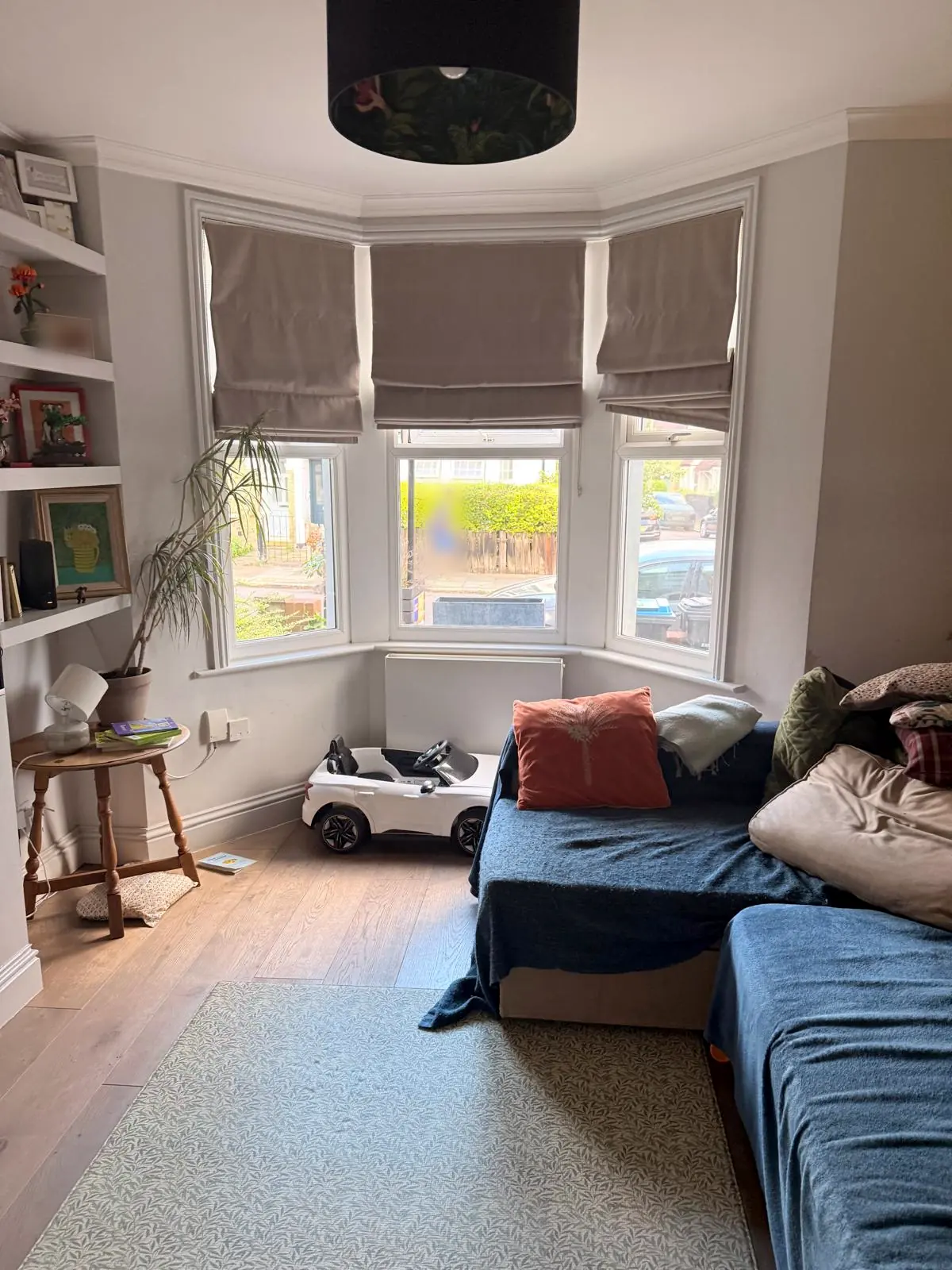
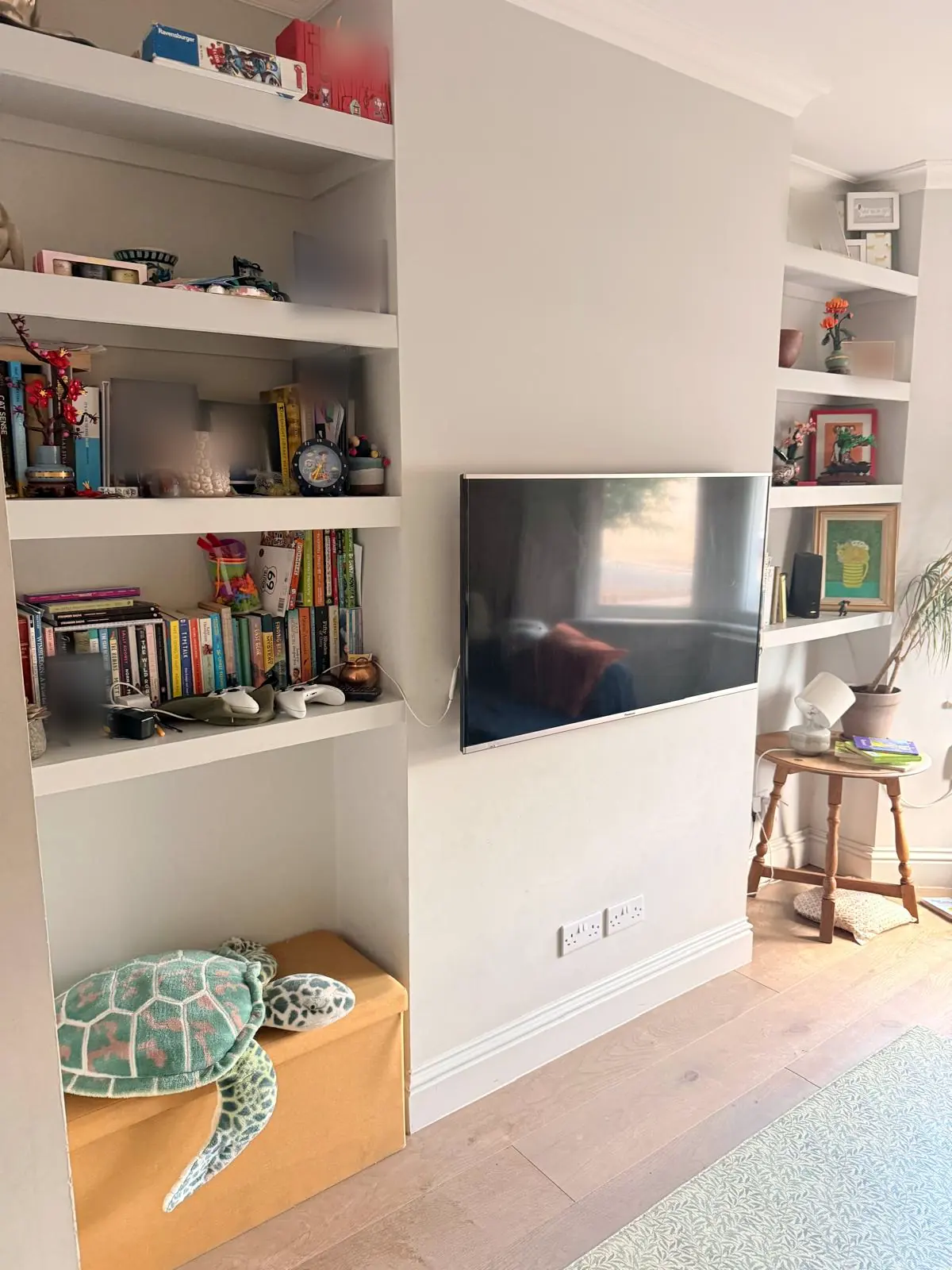
Recently, I was asked to rethink the front room of a Victorian terrace in North London. The brief was to make it feel warmer, more welcoming and cosier for evenings at home, using decoration and accessories rather than buying new furniture. The challenge? An old, rather battered sofa that had to stay!
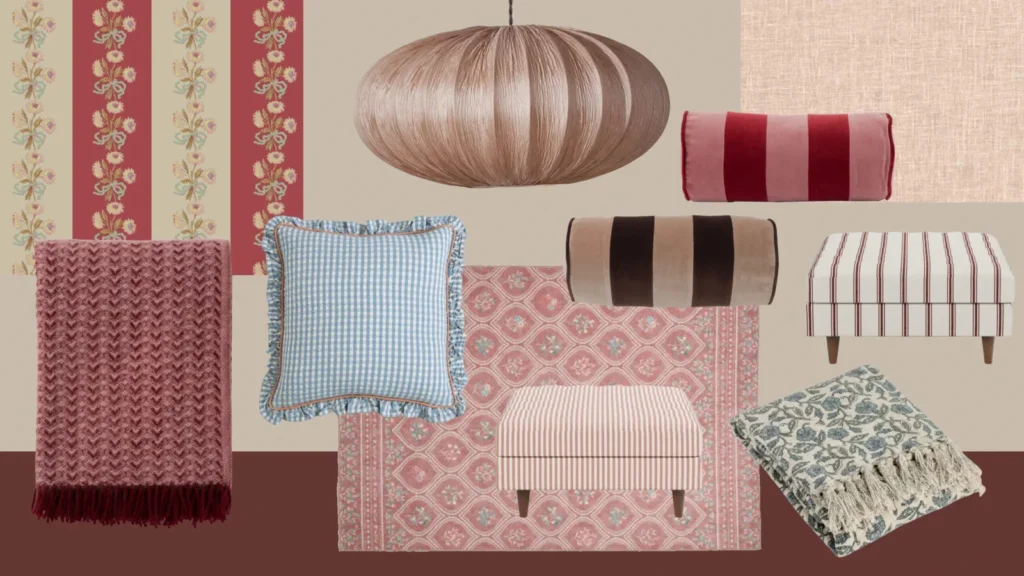
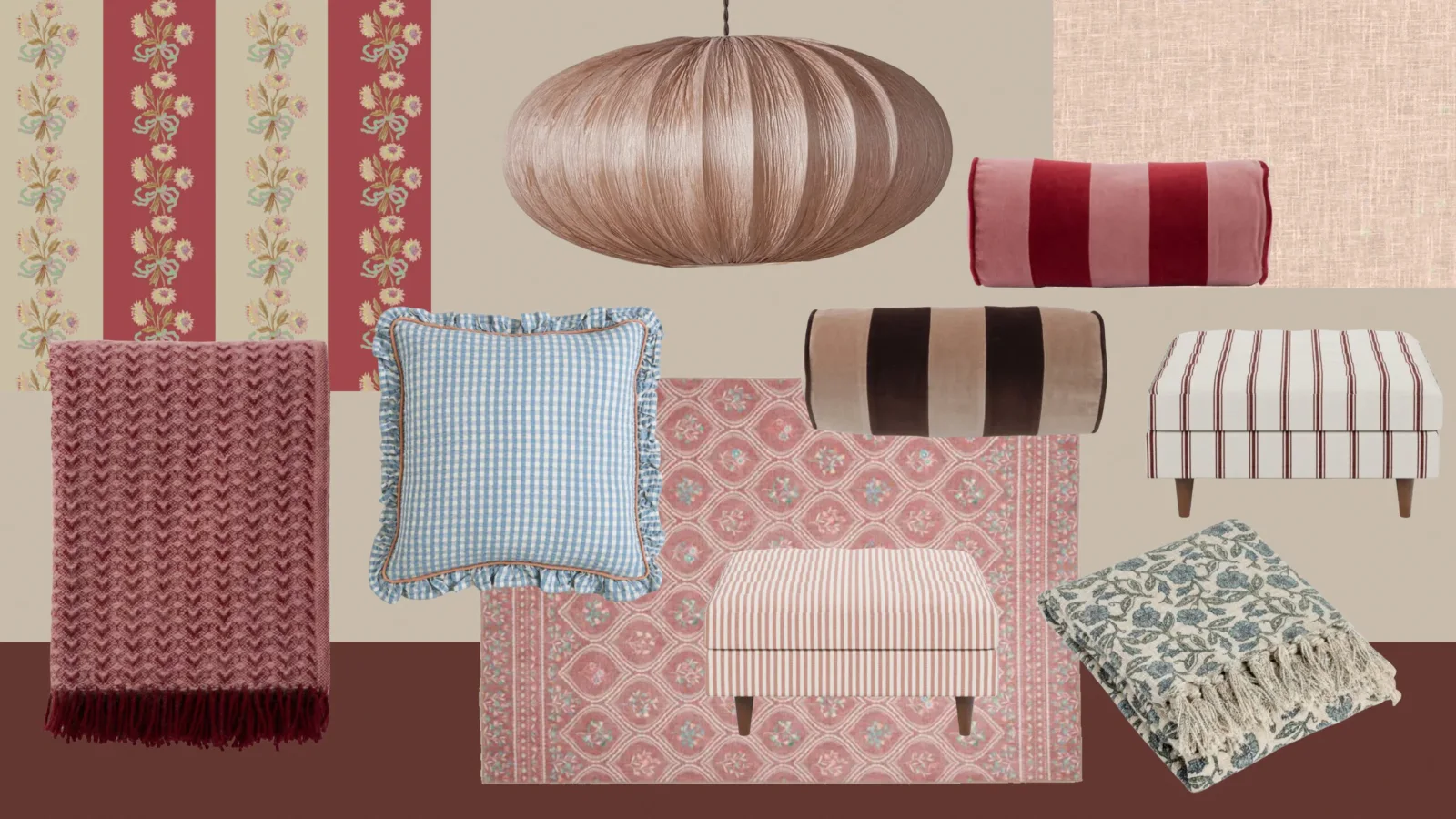
I had plenty of ideas and pulled them together into a moodboard for my client. Everything was approved, tick! But she wanted to see how the room might actually look in 3D before we went ahead.
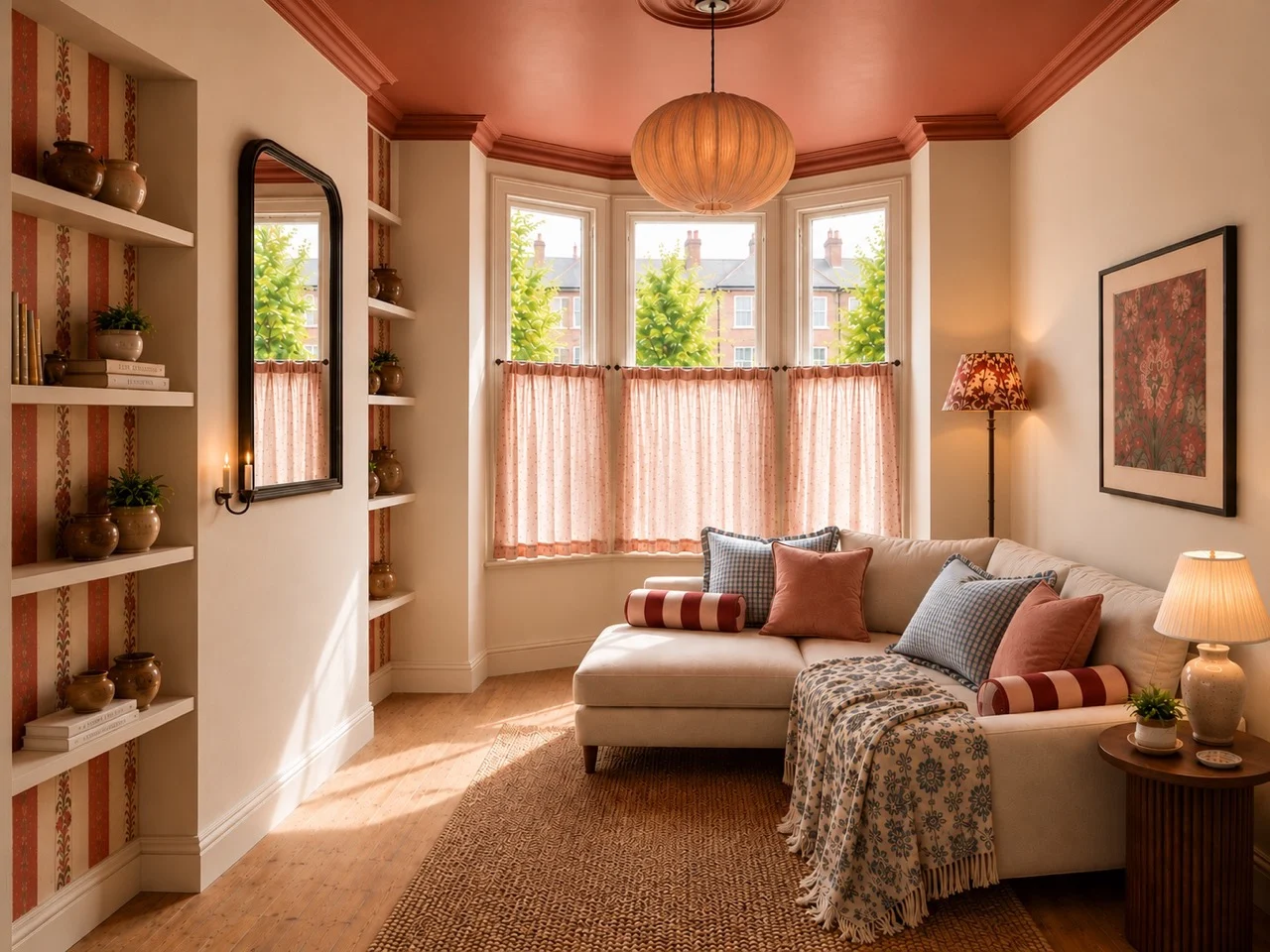
Photorealistic renders weren’t within the budget, so this was the perfect opportunity to use AI.
With carefully written prompts, I created a visualisation that gave my client a useful impression of how the finished room could look. And it worked brilliantly.
The important distinction is that the design work had already been done. I’d developed the colour palette, sourced the pieces, planned the arrangement and established the overall direction. AI helped me communicate that vision visually. It wasn’t making the design decisions for me.
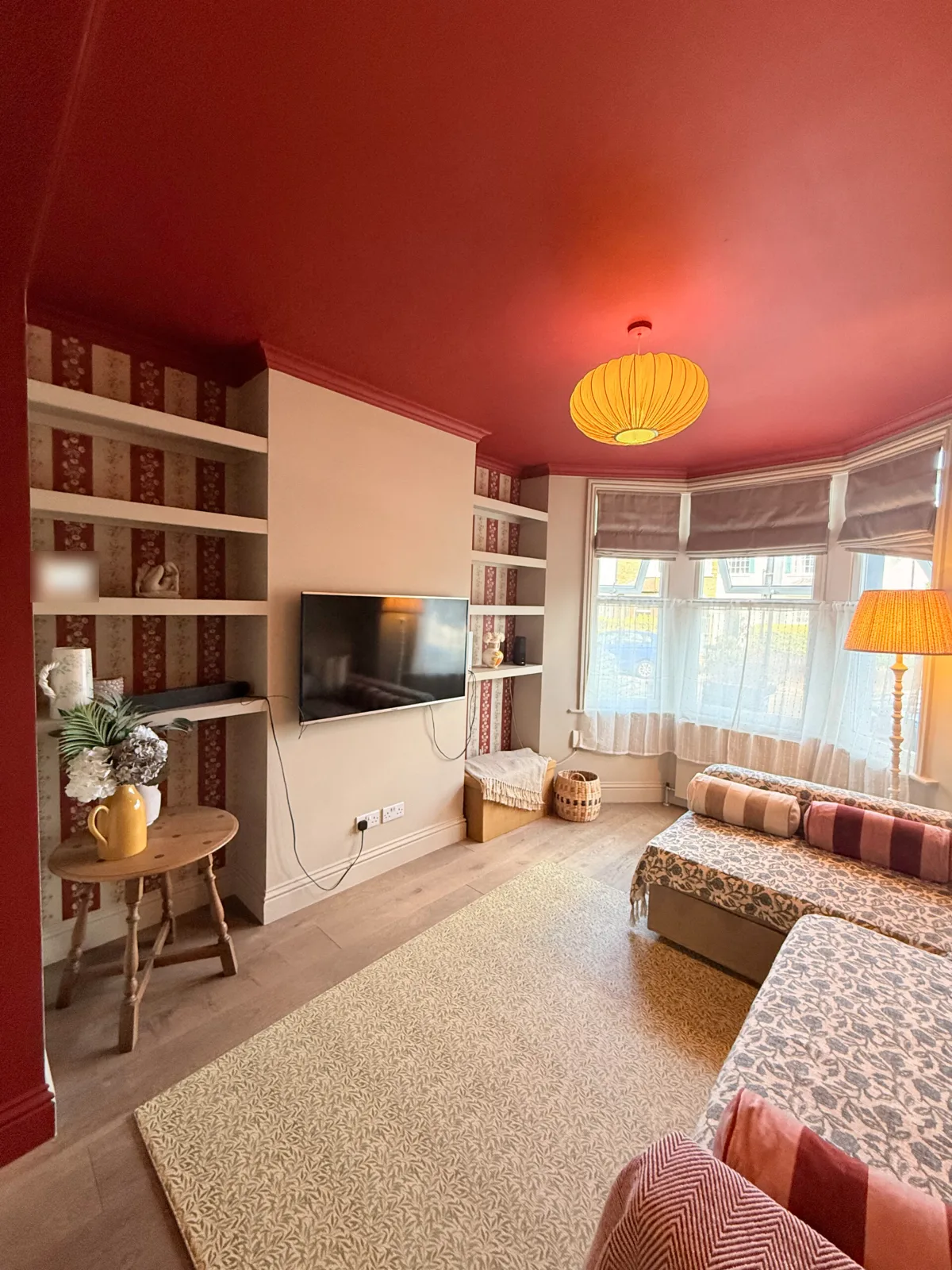
In this instance, it was a genuinely useful tool that helped my client understand and feel confident about the proposed changes.
Take a look at the process for yourself, from the room as it was, to the original moodboard, to the AI visualisation, to the finished room.
Your home deserves more than a good prompt
Your home is personal. It reflects your tastes, your routines, your memories and the way you want to live. It deserves to be designed with all of those things in mind.
You can absolutely use AI to explore ideas before embarking on a project. You might even discover a colour combination or layout that you fall in love with. And if it helps you understand what you want, that’s a wonderful starting point.
But when it comes to turning those ideas into a cohesive, practical and individual home, there’s a difference between generating possibilities and knowing how to bring them to life.
AI can help us imagine what is possible. But creating a home that works for you, both practically and emotionally, takes a human eye, a creative mind and an understanding of how all the pieces fit together.
Questions about AI and interior design
Can AI design my home?
AI can help you explore ideas, suggest colour palettes and generate images of a room, but it can’t design your home on its own. It doesn’t see your space or the way light moves through it, it doesn’t know how you live, and it can’t check measurements, source products or take responsibility for the finished room. Use it as a starting point, then turn the ideas into a practical plan with a designer.
Can ChatGPT design a room?
ChatGPT and similar tools can suggest colour schemes, styles and layout ideas, and image tools can create a picture of a room from a written prompt. The results can look impressive, but a picture isn’t a plan. It won’t tell you whether the sofa blocks the doorway, how a paint colour will look in a north-facing room or whether the products are actually available.
Will AI replace interior designers?
I don’t think so. I see AI as another tool in the creative process, not a substitute for the person guiding it. It can help us explore more possibilities, but someone still needs to decide which ones are right for the space, the budget and the people who live there, and then make it happen.
How do interior designers use AI?
Mostly as an assistant for early research. I recently used AI to show a client how her front room could look when photorealistic renders weren’t in the budget. The colour palette, sourcing and layout were already decided; AI simply helped her see it.
Is it worth trying AI before hiring an interior designer?
Yes, if it helps you work out what you like. Exploring ideas with AI can help you discover styles you hadn’t considered and arrive at a design conversation with a clearer idea of your preferences. Bring your favourite images to a home consultation and we can work out what will actually work in your space.

About Lucy Kelvie
Lucy Kelvie is an interior designer in North London and the founder of Lucy Kelvie Creative. She started working in interior design in 2018, following a career in photography, and her eye for light, colour and composition shapes every scheme. She designs homes across North London, including Muswell Hill, Highgate, Hampstead and Islington, from single-room makeovers to whole-house renovations.
Thinking about making changes to your home?
Whether you’re struggling with a paint colour, rethinking the layout of a room or simply feeling that something isn’t quite working, sometimes a fresh pair of eyes is all you need.
My home visits offer the opportunity to talk through your ideas, explore possibilities and find practical solutions tailored to your space, your taste and the way you live. If you’d prefer to work online, my Remote Design package offers the same professional eye from anywhere.
Let’s make your home feel more like you.